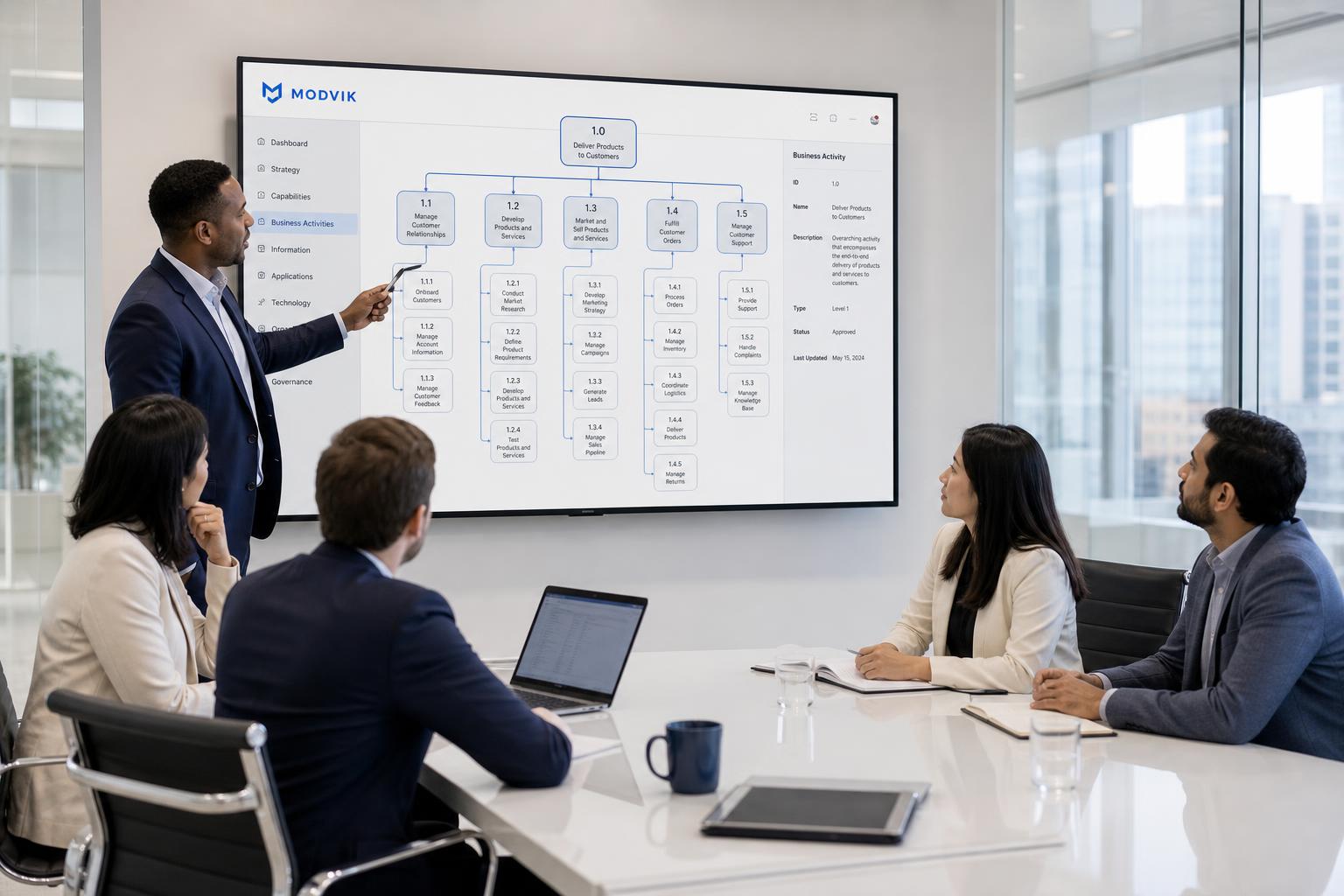
Business Process Architecture
Structure the work the organization performs—from enterprise capabilities to detailed operational activities.
Consulting & Methodology
Modvik turns operational knowledge into connected process models, clear requirements, and executable plans for change.
The problem
Organizations select software, automate work, or begin development before clearly defining the operation the technology must support.
The result is ambiguous requirements, conflicting expectations, duplicated functionality, expensive rework, and systems that never fully fit the business.
What we do
We create one connected foundation for process improvement, requirements, system modernization, software development, automation, and operational adoption.
Structure the work the organization performs—from enterprise capabilities to detailed operational activities.
Document operational reality, including exceptions, workarounds, handoff failures, system limitations, and control gaps.
Remove unnecessary work, reduce risk, strengthen accountability, and define how the organization should operate.
Translate validated needs into business requirements, functional specifications, business rules, and acceptance criteria.
Convert approved models into practical procedures, checklists, training foundations, ownership definitions, and controls.
Carry the model into system selection, architecture, integration, development, testing, and implementation.
Engagement outputs
Every deliverable originates from the same operational foundation, preserving traceability from evidence through execution.
The Modvik Method
Six connected phases convert scattered operational knowledge into validated models, executable requirements, and practical business outcomes.
Establish purpose, scope, stakeholders, sources, constraints, and evidence.
Convert available evidence into an initial integrated business model.
Confirm accuracy, resolve contradictions, and capture operational reality.
Normalize, connect, and identify root causes, risks, gaps, and opportunities.
Design the future state and evaluate process, organization, and technology choices.
Produce the approved assets required to put the future state into practice.
Make change visible
A validated representation of how the organization operates today—including exceptions, workarounds, risks, and limitations.
The approved target model showing how work should operate after proposed changes are implemented.
Alternative scenarios for evaluating process, organizational, system, and automation choices safely.
Ways to engage
Engagements can be structured as focused assessments, phased projects, defined statements of work, or ongoing advisory relationships.
Analyze and improve a defined workflow, operational problem, compliance need, or recurring source of risk.
Prepare for the selection, replacement, integration, configuration, or development of a business system.
Create an integrated operating model across multiple processes, teams, systems, or locations.
Add ongoing process, requirements, product, architecture, or implementation leadership throughout a transformation.
Why Modvik
Define the business before prescribing what should be purchased, configured, automated, or built.
Ground models in sources, stakeholder knowledge, operational evidence, and documented assumptions.
Keep requirements connected to the activities, issues, rules, and objectives they support.
Maintain continuity from discovery and design through implementation and adoption.
Start with the business
Tell us what you are trying to improve, modernize, replace, or build. We'll help establish the foundation.
Start a consultation Relevant examples and experience can be discussed privately.